
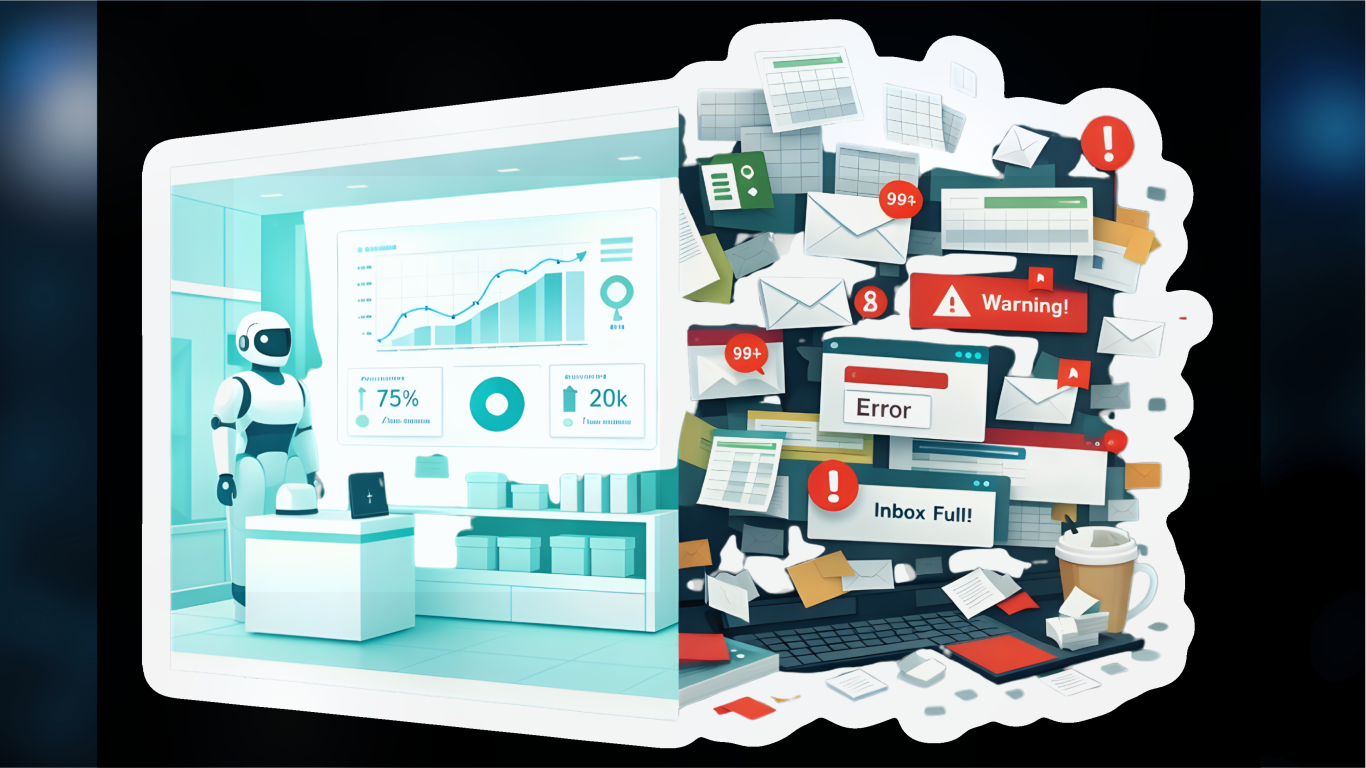
Automation does not replace people. It replaces the repetitive work that prevents people from doing their best thinking.
The Problem: Retail’s Administrative Chaos
Retail moves fast, but your back-office can’t keep up.
The Daily Grind
- Inventory teams manually check supplier emails to track stock levels
- Finance staff toggle between multiple systems to reconcile payments and sales
- Store managers spend weekends building schedules instead of analyzing customer trends
- Procurement teams retype supplier invoices into ERPs, line by line
The reality: Your highest-paid talent spends 60% of their time on manual data entry instead of customer-facing activities or strategic planning.
The Impact: Revenue Leaking Through the Cracks
Manual processes create compounding business damage:
Stock-Outs & Lost Sales:
Trending items go out of stock because reorder alerts sit buried in email. Customers move to competitors.
Margin Erosion:
Suppliers quietly raise prices. It goes undetected for months because no one has time for proper invoice matching, silent profit loss compounding week after week.
Reactive Decision-Making:
Leadership works with week-old data. You’re steering the business using last week’s map.
Invisible Overpayments:
Billing errors slip through. Duplicate charges go unnoticed. Early payment discounts are missed.
Talent Drain:
Your best people spend their days as glorified typists. They don’t quit because the work is hard, they quit because it’s mindless.
The hidden cost? You’re bleeding operational efficiency while competitors who’ve automated are reinvesting those hours into growth.
The Solution: AI-Powered Transformation in 4 Steps
- Step 1: Intelligent Document Processing with AI
- Step 2: Automated Reconciliation with Smart Matching
- Step 3: Exception-Based Management
- Step 4: Predictive Intelligence Through AI
The Results: From Manual to Intelligent Operations
Before:
Your team drowns in administrative tasks. Days disappear into manual reconciliation and fixing avoidable errors. Strategic projects stay on the “someday” list.
After:
AI-enabled, clarity & capacity. Now your team starts each day with clean dashboards and actionable insights. AI handles the routine. Humans handle relationships, strategy, and growth.
The unexpected wins
- Staff retention improved: people stay when work is meaningful
- Customer experience improved because teams focus on service, not spreadsheets.
This is responsible AI in action: technology amplifying human capabilities, not replacing them.
Your Next Move
You’re sitting on 20-30 weekly hours consumed by manual processes. The question isn’t whether you can afford AI automation, it’s what growth you’re sacrificing by staying manual.
Discover how our AI solutions and intelligent automation transform back-office chaos into competitive advantage. Whether you’re navigating AI digital transformation for the first time or scaling existing operations, our enterprise AI solutions are built to deliver measurable results.